

Mountains
EVEREST SUMMITEER
MOUNTAIN & EXPEDITION LEADER
HIGH ALTITUDE EXPERT
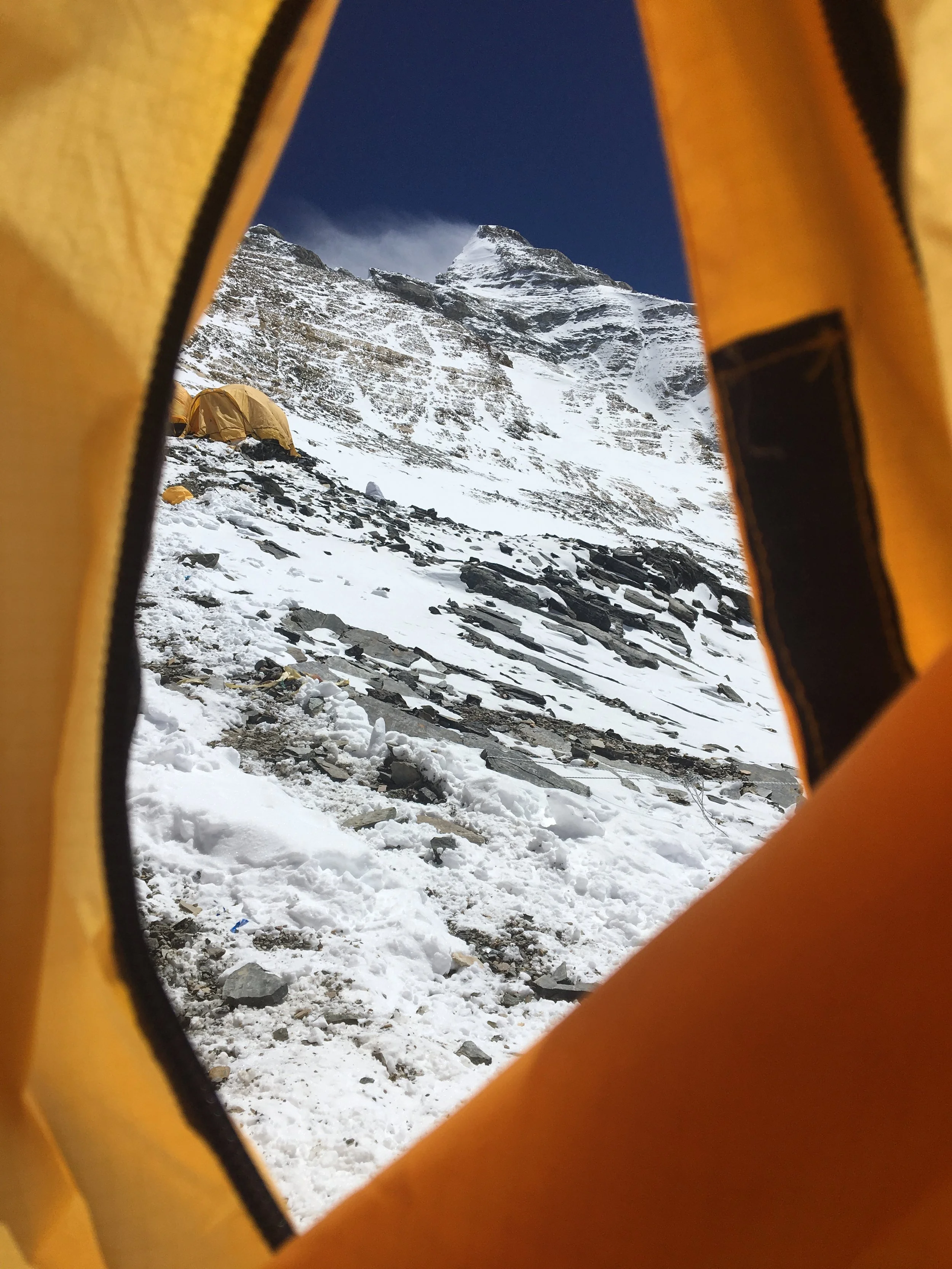
The Call of the Thin Air
My journey into the high mountains began in 1996 on the slopes of Gondoro Peak in Pakistan. Since that first encounter with the Karakoram, the "thin air" has become the defining backdrop of my life.
For me, high-altitude climbing has never been about conquering nature; it is a pursuit of clarity. There is a profound simplicity found above 5,000 metres - where the noise of the modern world falls away, and life is reduced to the rhythm of your breath, the slow cadence of careful foot placements, and the limits of your own physiology.
This fascination with human limits led me to study the science of performance, but the mountains taught me lessons that no classroom or lab could provide.
My path to the summit of Everest was not a straight line; it was a sinuous path paved with the grit of the Marathon des Sables, the high-stakes pressure of humanitarian missions in Sudan and Haiti, and an apprenticeship in the Alps.
I’ve learned that mental toughness isn’t found in a single successful summit, but in the decision-making required when the weather turns, in the discipline of a long acclimatisation cycle, and in the humility to respect the mountain's power.
The stories and images below are snapshots from thirty years of exploration. They represent the peaks reached and the lessons learned when things didn't go to plan. More than just a list of summits, they are a record of a life spent seeking the perspective that only the world's highest places can offer.
EXPEDITION SNAPSHOTS

2010, New Guinea Highlands, Puncak Trikora
Indonesian New Guinea: The Limits of One
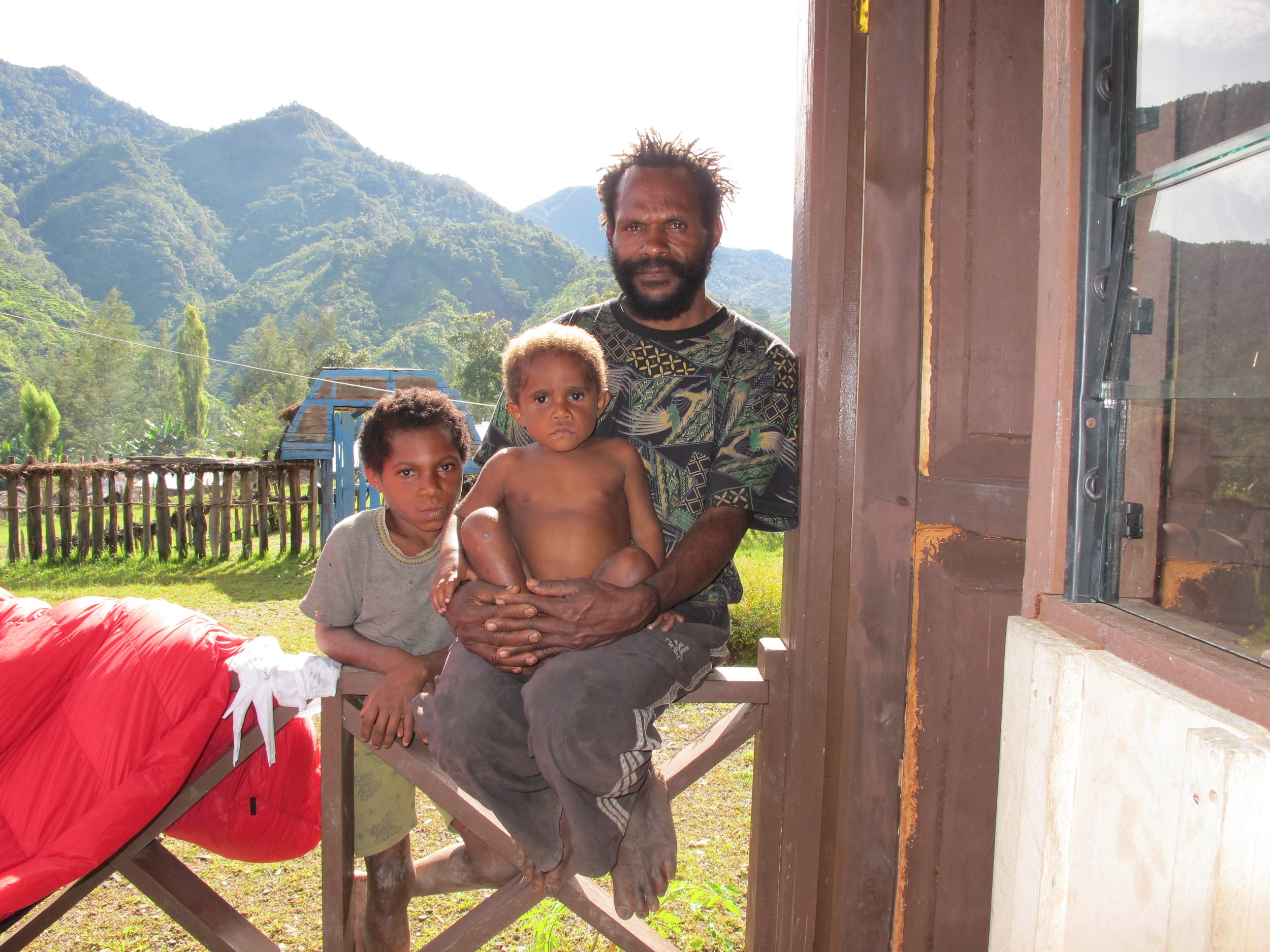
In 2010, I found myself deep in the heart of Papua province, Indonesian New Guinea, on a solo expedition that would test every facet of my resilience. After my original team was forced to withdraw, I proceeded alone into one of the most remote wildernesses on Earth—a land where maps were non-existent or incomplete and the "frontier" was defined by dense jungle and ancient tribal territories.
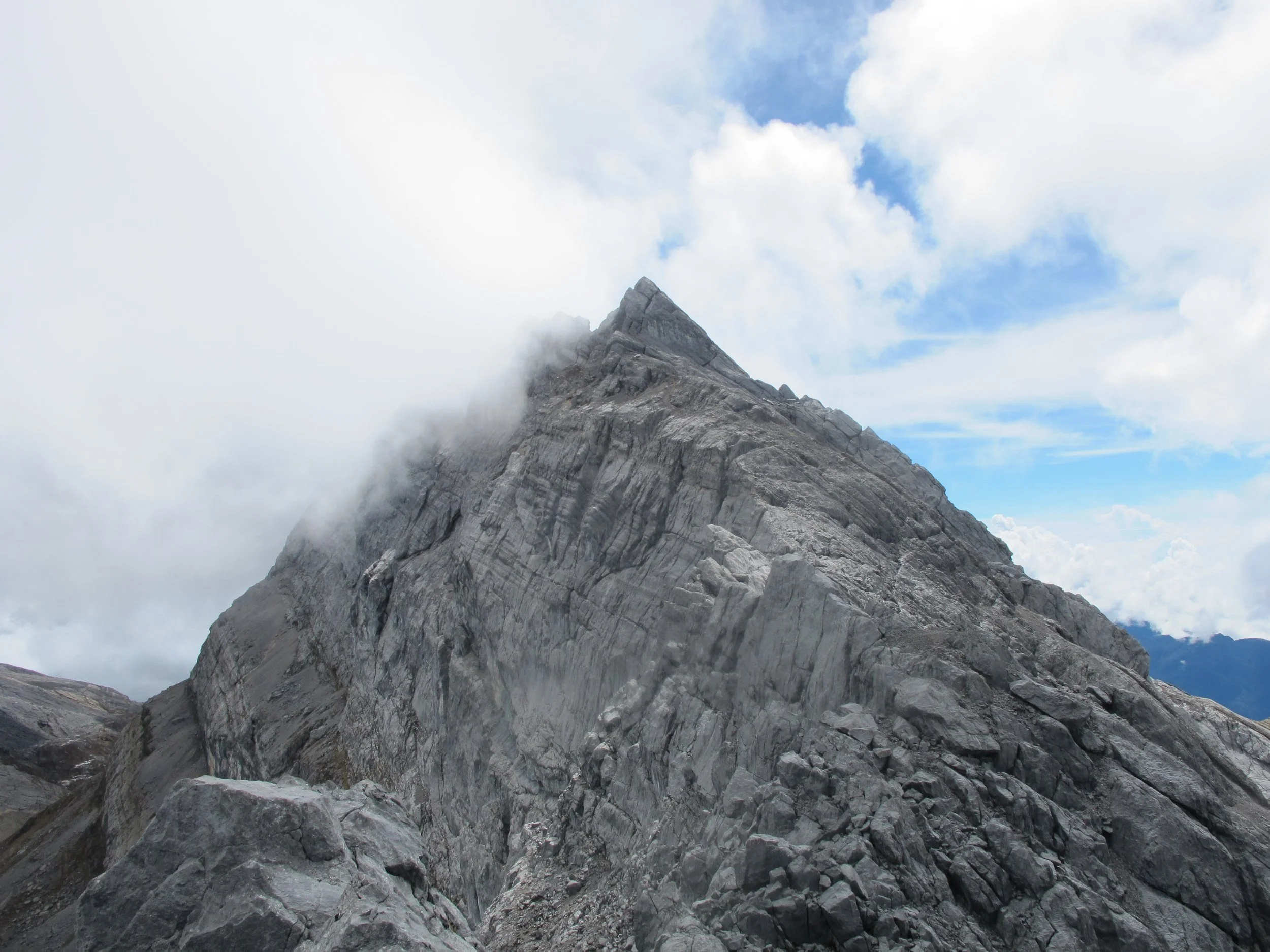
The defining moment of the journey took place on the ridges of Puncak Trikora. During a solo reconnaissance, weakened by dehydration and the thinning atmosphere, I made a critical error in judgment, attempting a shortcut down a steep escarpment.
I found myself swinging over a twenty-foot ravine, my safety dependent entirely on handfuls of wet grass. It was a visceral, "stark reminder" of how quickly a single bad decision can snowball into a life-threatening crisis when you are miles from the nearest help.
Ultimately, I gained the summit ridge, a "knife-edge" of dark limestone cutting through the equatorial clouds. I reached a high point of 4,638 meters, standing just thirty meters below the final rocky spire. As I stared at the horrifically exposed rock, I faced the ultimate test of a high-altitude leader: the decision to turn back. Solo and without technical backup, I knew a single slip would be fatal.
I turned around that day not with a sense of failure, but with a "quiet satisfaction". I had found my limit and respected it, a lesson in survival that has informed every expedition I’ve led since.
Read my detailed expedition report here.
2011, New Guinea Highlands, Carstensz Pyramid
Stone Age Adventure: Limestone Fortress
In 2011, I returned to the heart of Papua for the second leg of my "Triple Seven Summits" project. My target was Carstensz Pyramid (4,884m), the highest point in Australasia and arguably the most technical of the world’s Seven Summits.
The journey began long before we touched the rock. It was a week-long odyssey through one of the most primitive environments on Earth - a trek through dense, vertical jungle where the mud is perpetual and the rain is a constant companion. But as the jungle canopy finally broke, we were met with the sight of a 4,000-foot wall of jagged, grey limestone rising into the mist.
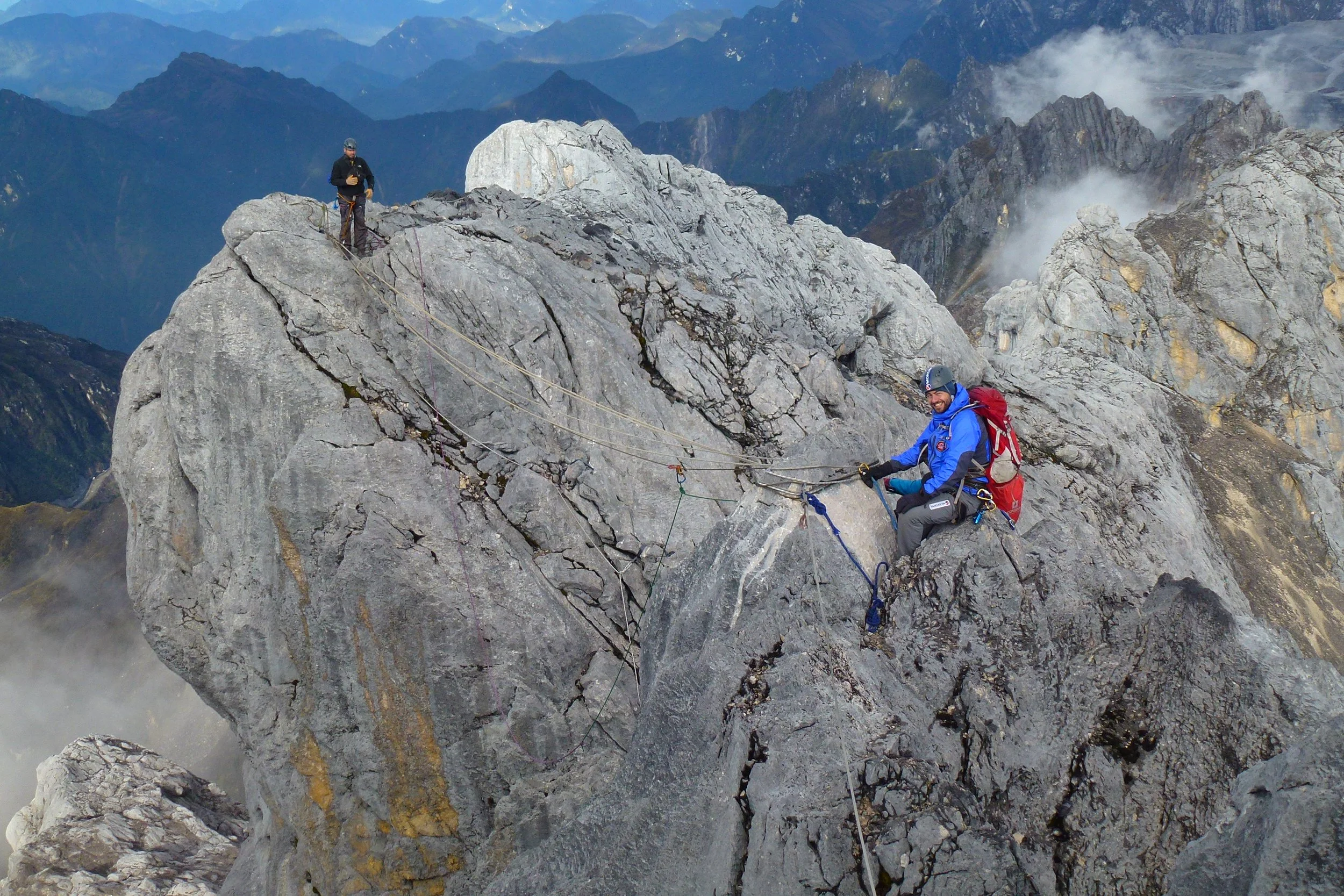
The climbing was visceral. Unlike the snowy slogs of other high peaks, Carstensz required precision on sharp, abrasive rock. The defining moment was the infamous Tyrolean Traverse: suspended hundreds of feet above a gaping limestone chasm, I had to haul myself upside-down across a single rope to gain the final summit ridge. In that moment of total exposure, the noise of the world vanished. There was only the tension of the rope, the strength in my arms, and the singular focus required to move forward.
Standing on the summit, looking out over the fast-receding glaciers I had come to document, I felt a deep sense of satisfaction. It was a powerful reminder that while the jungle tests your patience, the mountain tests your soul—and both are necessary to find out what you are truly made of.
Watch my expedition film below or here.
Sunrise from the Bosses Ridge on Mont Blanc
A windy morning on Mont Blanc’s summit ridge
Reaching the summit of Mont Blanc.
2015, European Alps
The Alpine Pivot: High Stakes on the Matterhorn and Mont Blanc
In the world of high-altitude mountaineering, the mountain always has the final say. In late August 2015, I travelled to the Alps to face two of the most iconic peaks in Europe: the technical, tooth-like spire of the Matterhorn and the soaring, frozen dome of Mont Blanc. It was a week defined by physical pain, shifting weather windows, and the most important skill in any climber’s toolkit: the ability to pivot.
Part I: The Matterhorn and the Weight of Judgment
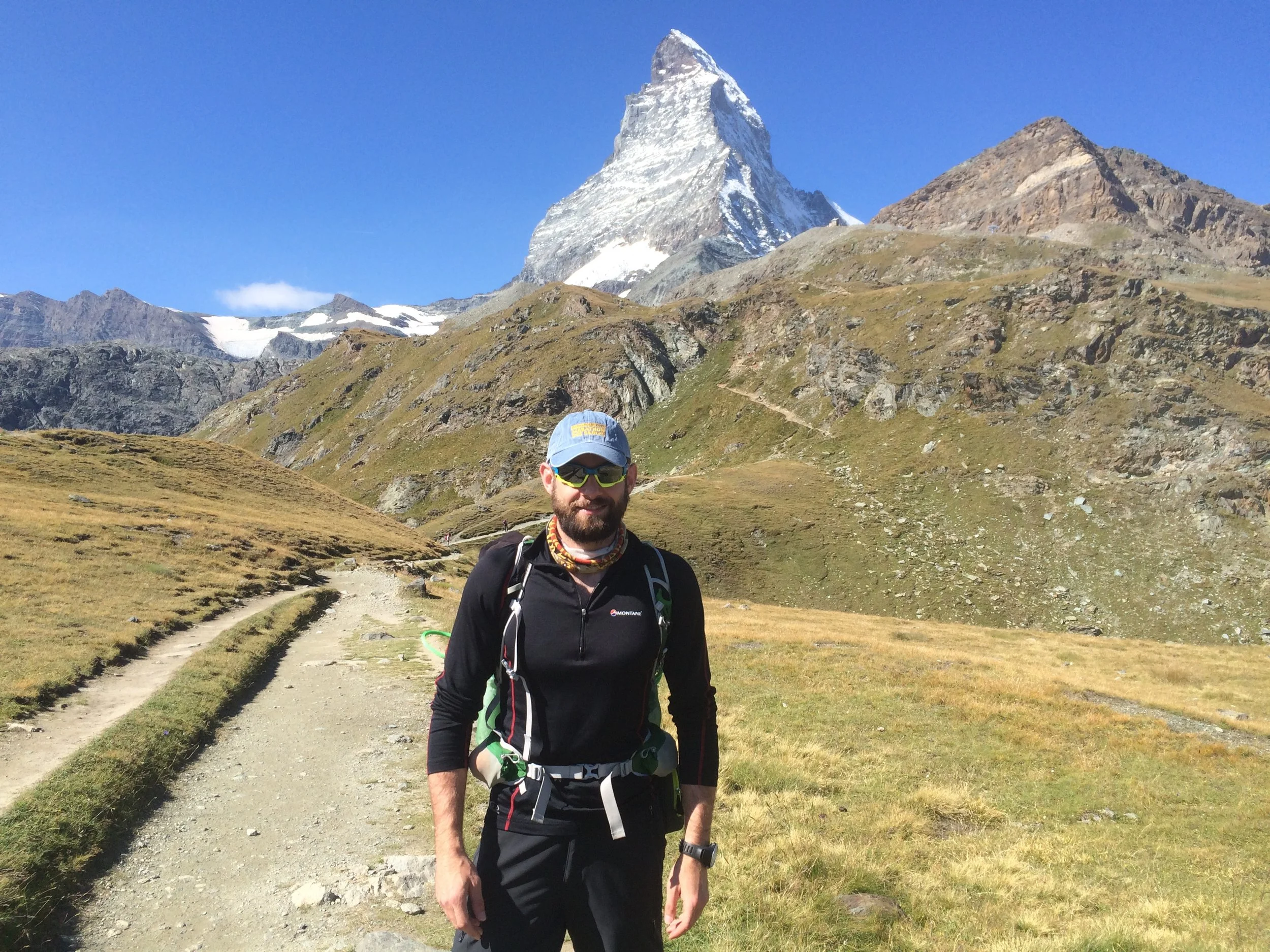
The expedition began with a hurdle before I even left the UK. A pulled Quadratus Lumborum (QL) muscle had left my lower back in spasm, threatening to end the trip before the first flight. Fuelled by prescription anti-inflammatories and stubbornness I met my longtime teammate George Kashouh in Zermatt.
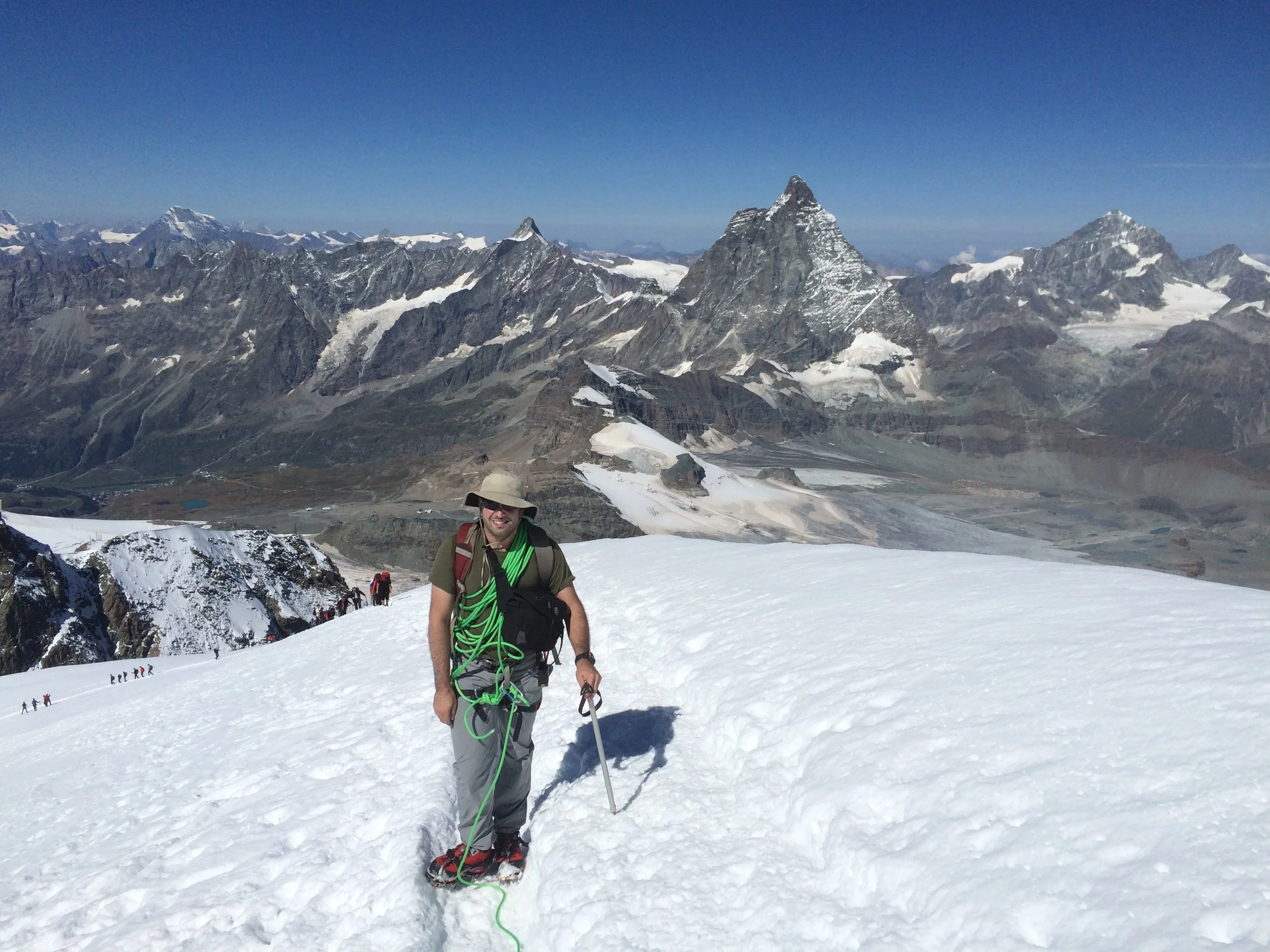
After two rapid-fire acclimatsation runs up the Breithorn (4,164m), we moved up to the historic Hörnli Hut. At 3,260m, the hut is a cathedral of mountaineering history, but our focus was on the future—a narrow weather window for an unguided attempt on the Hörnli Ridge.
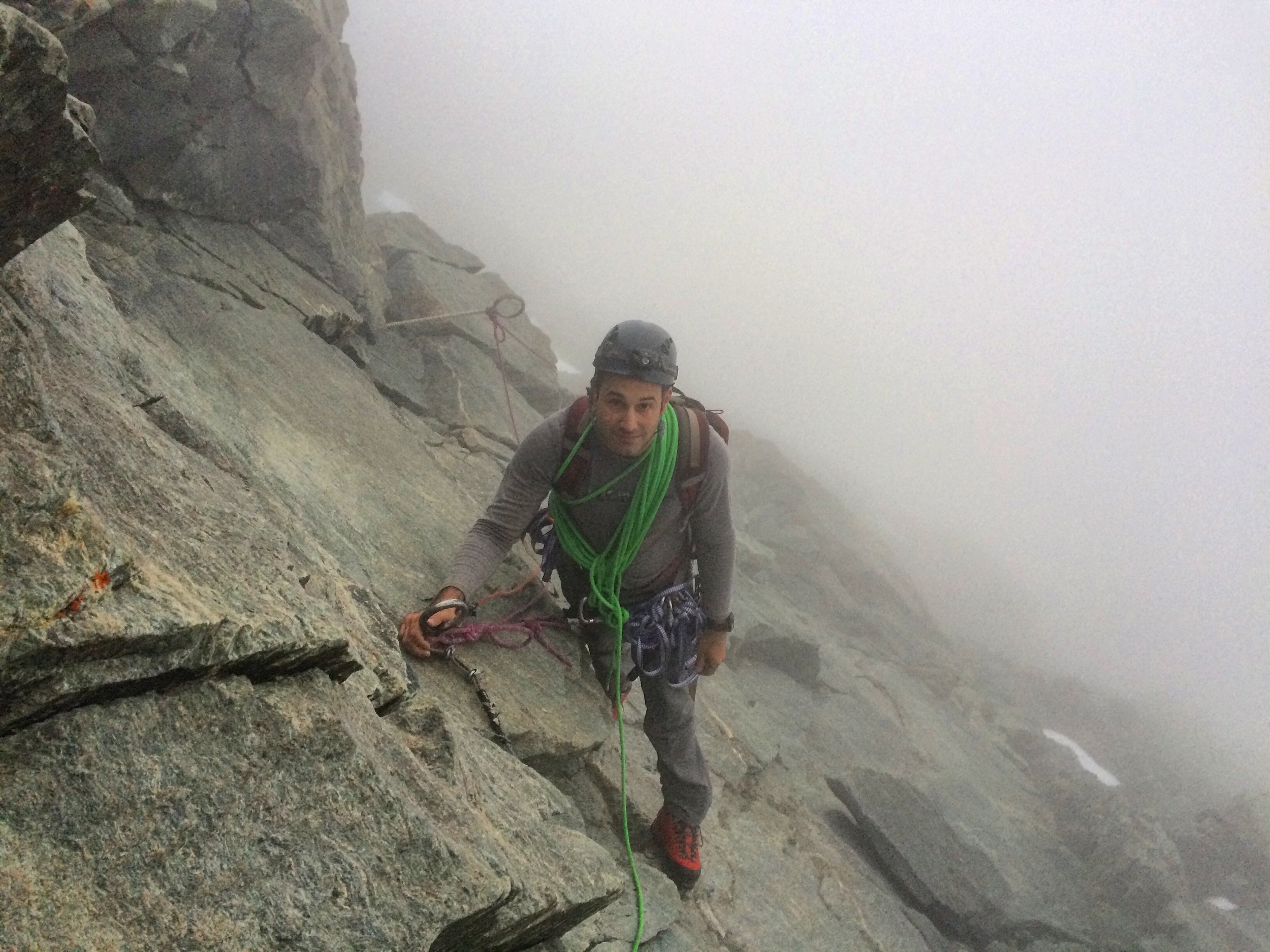
We roped up at 04:30 under an overcast sky. Leading a major Alpine route of this grade (AD) for the first time, I felt the weight of responsibility. As we scrambled up the exposed, rocky ridge, the visibility began to collapse. By the time we reached the Solvay Emergency Hut at 4,000m, a hailstorm had arrived—a precursor to the snow that would soon turn the upper sections of the mountain into a treacherous, icy trap.
As an unguided team, route-finding in the clouds is a psychological gauntlet. We watched as guides ahead of us made the call to turn their clients back. It is easy to let "summit fever" cloud your judgment, but standing at the base of the upper Moseley slabs, the data was clear. The freezing precipitation was increasing, and the risk was becoming unmanageable. George and I made the mutual call to descend.
We descended through hail and deteriorating conditions, spending three and a half hours carefully down-climbing the wet ridge. We didn't reach the summit, but I left the Matterhorn with something more valuable: the confidence of having led three-quarters of an elite route and the wisdom to know when the mountain is saying no.
"Getting to the top is optional, getting down is mandatory" - Ed Viesturs
Part II: Mont Blanc—A Solo Study in Speed
With the Swiss Alps locked in by storms, I turned my attention to France. A brief, cold weather window was opening on Mont Blanc (4,810m). I decided to attempt a solo ascent via the Goûter Route—a journey that would test my technical efficiency and my ability to move fast against a -23°C windchill.
The Frozen Ascent
Setting off from the Tête Rousse refuge at 01:50, I moved with a singular focus. The "Grand Couloir"—notorious for lethal rockfall—was frozen and stable in the early morning cold. I bypassed roped parties, my pace accelerated by my recent work on the Matterhorn and a "light and fast" philosophy.
By 04:10, I reached the new Goûter Hut at 3,817m, kitted up with crampons and mitts, and stepped into the teeth of the wind.
The Bosses Ridge
The final approach via the Bosses Ridge is one of the most aesthetic and exposed walks in the Alps. The wind was whipping fresh snow across the narrow ridge like sand, creating a surreal, dawn-lit landscape of blowing spindrift. Moving unroped on a knife-edge ridge in strong winds requires absolute presence; a single snag of a crampon on a trouser leg would be catastrophic.
I focused on the rhythm of my breath and the placement of my ice axe. At 07:30, just 5 hours and 40 minutes after leaving the Tête Rousse hut, I stepped onto the summit of Western Europe.
The elation of the summit was brief, replaced immediately by the cold calculation of the descent. Standing at the top, watching the sun rise over the French Alps, I realized that while the Matterhorn had taught me about the courage to stop, Mont Blanc had taught me about the power of preparation & persistence.